
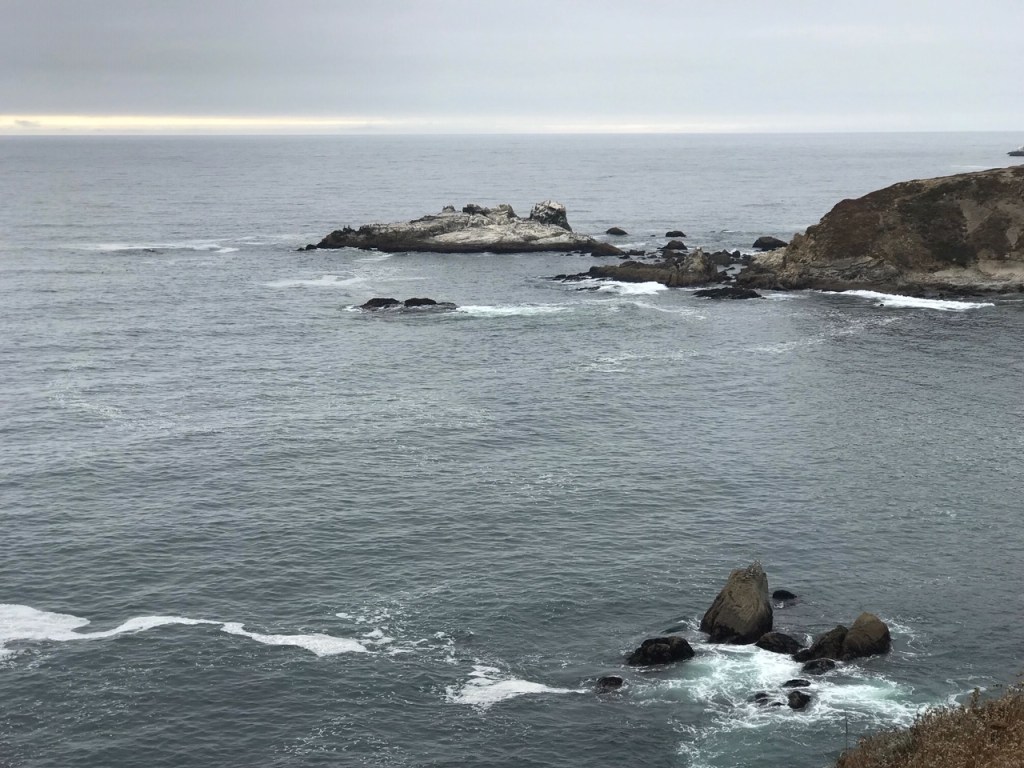
Greetings from Timber Cove, on the Sonoma coast where my family spent the last few days of summer. School was only a week away and so we came to relax, watch the waves of the Pacific Ocean crash against the rocks, and hike along the bluffs of Timber Cove, Gualala and Sea Ranch. I loved being near the ocean watching the cold, harsh waves beat against the rocks and spray foam. I found it calming and beautiful.
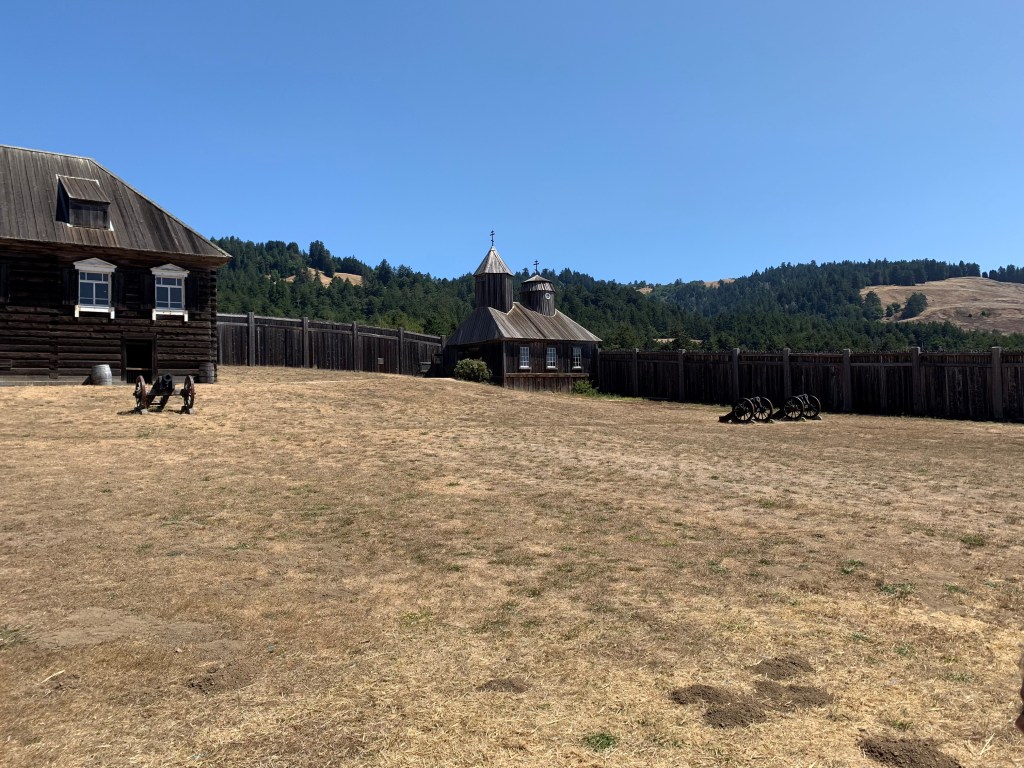
We spent a day at Fort Ross, which was a Russian settlement in the 1800s.
When I was in 5th grade, my class came to Fort Ross to do an overnight re-enactment field trip, with costumes and jobs and characters. The militia (which I was in) chopped wood and carried water and muskets (real ones), the cooks churned butter, the artisans made charcoal drawings and babushka dolls, the hunters fished from the rocks, and the clerks set up shop. We watched the sunset from the cliffs, we told scary stories in the chapel, and we had night watch. That’s how I fell in love with the Fort.
On this visit, we walked along the gravel path from the visitor’s center towards the old fort. My mom hadn’t been on the class trip, so I was excited to show her around and to be reunited with my memories of the place. I walked ahead of my parents, my stomach bubbling with anticipation as I approached the Fort’s border wall. My parents caught up with me as I excitedly walked in. The Fort was not exactly how I remembered. The grass was dry and brown instead of lush and green and the sour grass was gone.
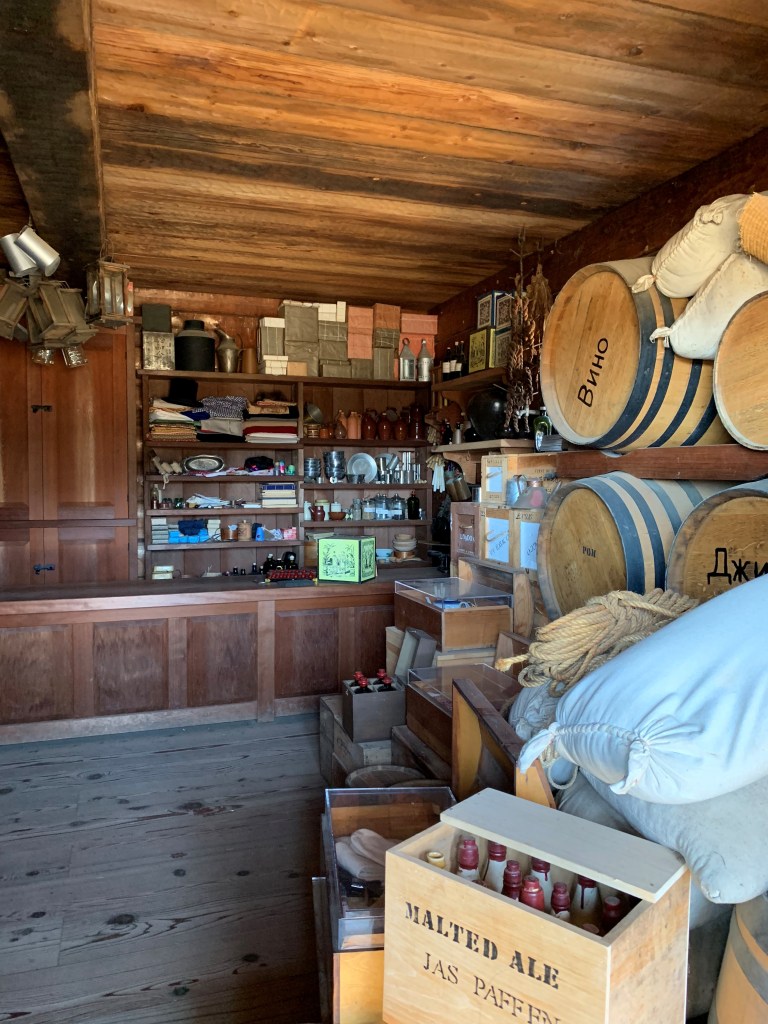
I started off with the small log building where the cooks had kept all their supplies and where my teachers had slept. We walked down the dark hallway and passed small rooms filled with miscellaneous objects, such as cooking pots and pans, buckets, and rope. We passed two more rooms with beds in them and a long table where I had seen my teachers waxing the letters that we had received from our family.
We continued towards the Kuskov house, where Ivan Aleksandrovich Kuskov, the founder of Fort Ross, had lived. We peeked into his study and saw a magnifying glass, a telescope, ink and quill, a blotting sheet. We walked upstairs to see where the cooks, clerks, and artisans had slept during our field trip. There were bedrooms that were sealed off by ropes and bars that had beds inside of them with old and musty duvets.
We were unable to enter the large building where the clerks had set up their shop and where the artisans had worked. We peeked through the bars. Lots of animal hides (hopefully, they weren’t real) hung from the ceiling. I remembered how, when my class was here, the tables were piled up with baskets full of handmade bracelets, keychains, charcoal drawings, babushka dolls, wooden beads, packs of small “vintage” envelopes, bags of trail mix, little embroidered pouches, and bottles of salt. I remember us lining up with our items and our “rubles” in hand, waiting to purchase some goods.
And finally, we came to the militia barracks. The room where the militia had slept was a small, round and dusty with two windows as a look-out, for invaders.
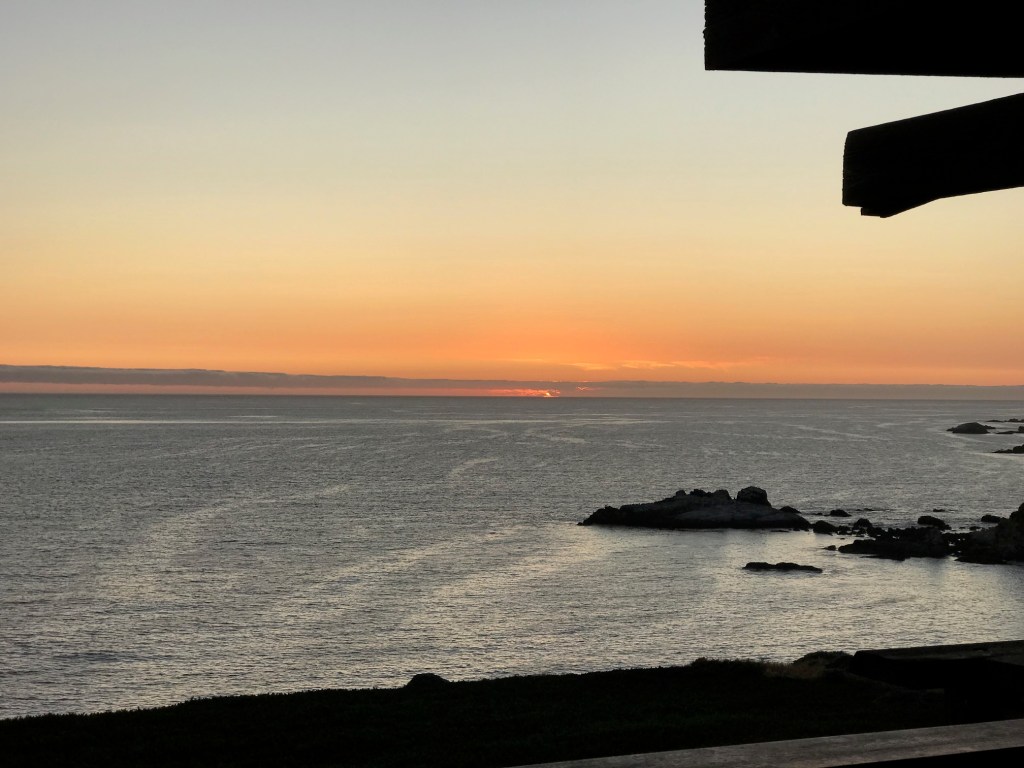
The day ended with the three of us sitting on the cliffs watching whales breach and spout from the ocean. The sky darkened and the wind and water pounded at the rocks. We settled into sleep and prepared to return home.
Until next,
Cyanjasmine11







 Tranquil & Tumultuous Travels