
The clear liquid was mildly sweet and warm, as I slurped it through the straw. The white flesh of the coconut was slippery and it slid easily out of my hands and down my throat.
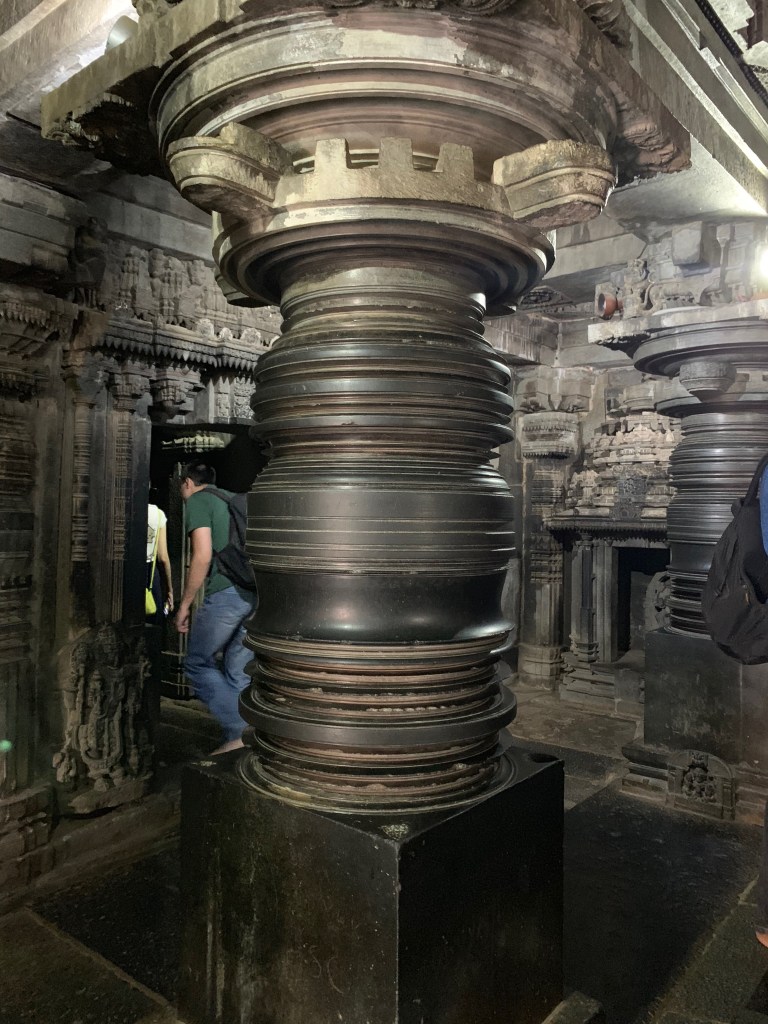
We were at the Chennakeshava temple, a 13th century Vishnu temple built by the Hoysala empire, about an hour outside of Mysore (now called Mysuru), the capital of the kingdom of Mysore for six centuries. The pavement burnt our bare feet, as we walked around the edge of the temple. But the dark stone in the dimly lit inactive place of worship cooled our hot and dusty feet, as we walked around, admiring the ancient architecture. The thick pillars resembled an unfinished work of pottery but were still beautiful. The statues of Vishnu and incarnations of Vishnu were closed off, but the entrance to the chambers that held them were flanked with smaller figures.


Two days ago, we had arrived in Mysore, a city known for its palaces, silk sarees, sandalwood and rosewood. We were staying at the Green Hotel which was originally a palace built for the princesses of Mysore. Ten years ago, my parents visited Mysore with me as a baby and stayed at this hotel.
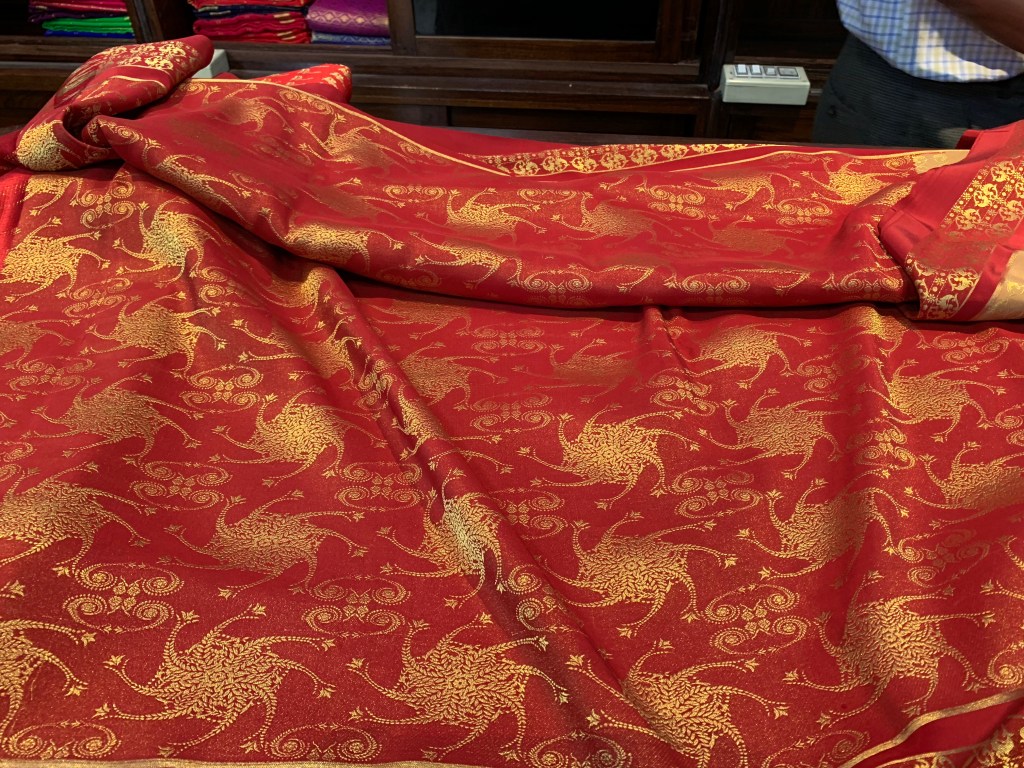
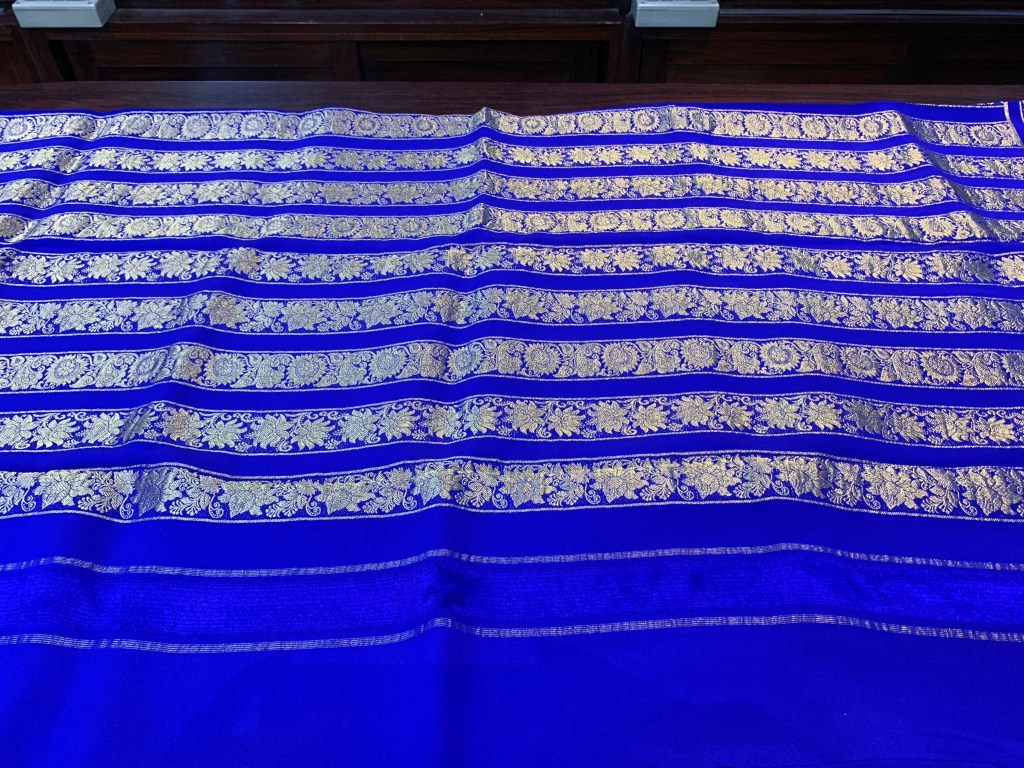
Since Mysore is famous for silk sarees, we visited a saree shop. Sarees in vibrant colors – purple, pink, green, blue, red, orange, mustard – lined the shelves of the shop. Some were plain and had only one or two colors with a darker color forming a border at the bottom of the saree. Some were very ornate and embroidered with gold thread. After changing our minds many times, we bought a deep royal blue saree with beautiful gold thread embroidery as a present for my Patti for her sixtieth wedding anniversary.
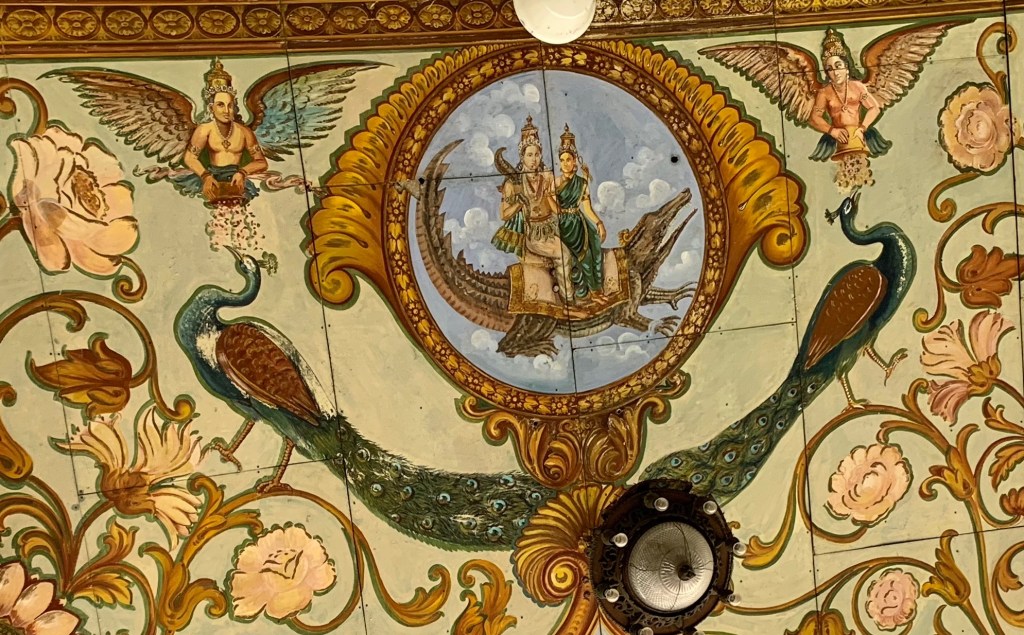
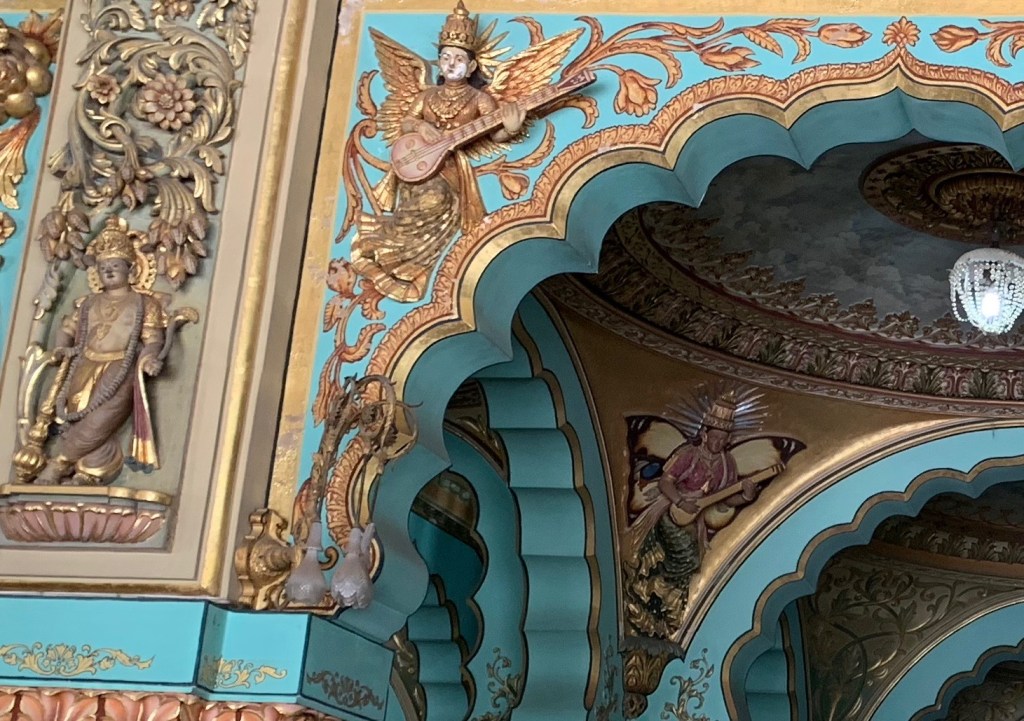
In the morning, after some disgusting masala chai, (compared to the chai at Kabini), and a delicious breakfast of masala omelette, we went on to the dazzling Mysore palace. We had to take off our shoes and leave them at a shoe counter before entering the palace. The gilded pillars towered high above us as we walked across the cool tiles. The arched ceiling of the “durbar hall” – where the maharaja held court – was adorned with depictions of Indian gods and goddesses. It was amazing to see that, instead of western biblical depictions or Roman or Greek gods and goddesses, they were Indian. My favorite part of it all was probably the female angels. When we think of angels, we usually think of fair-skinned young males who are dressed in flowing white robes and carry harps. These angels were female, wearing sarees and holding sitars, and instead of golden curly hair, they had flowing black hair and a golden crown atop their heads.
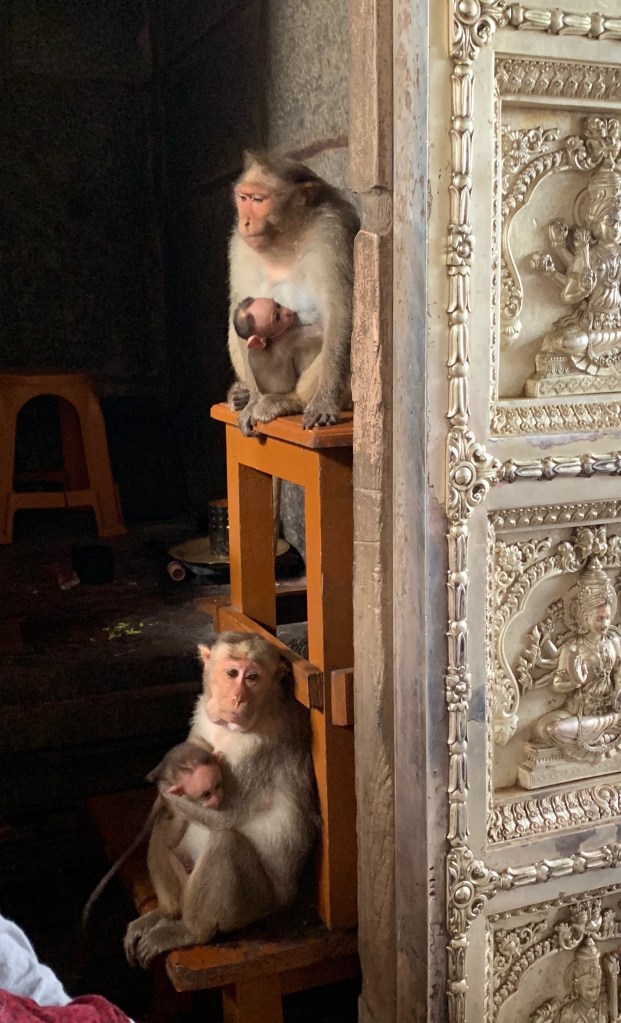
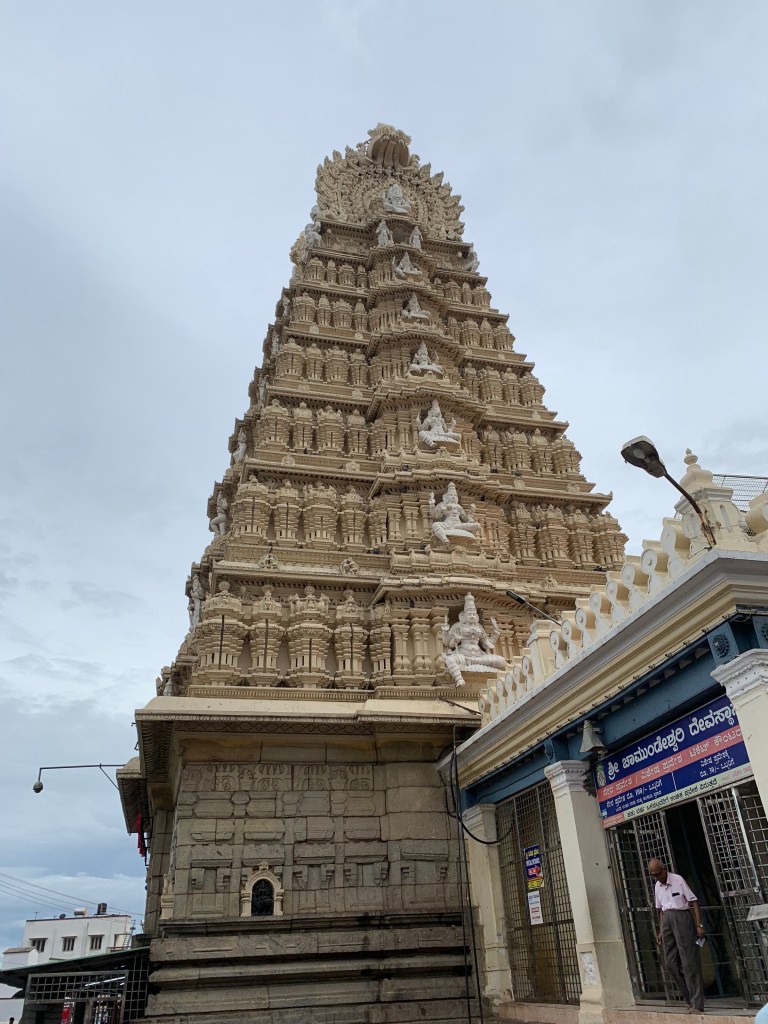
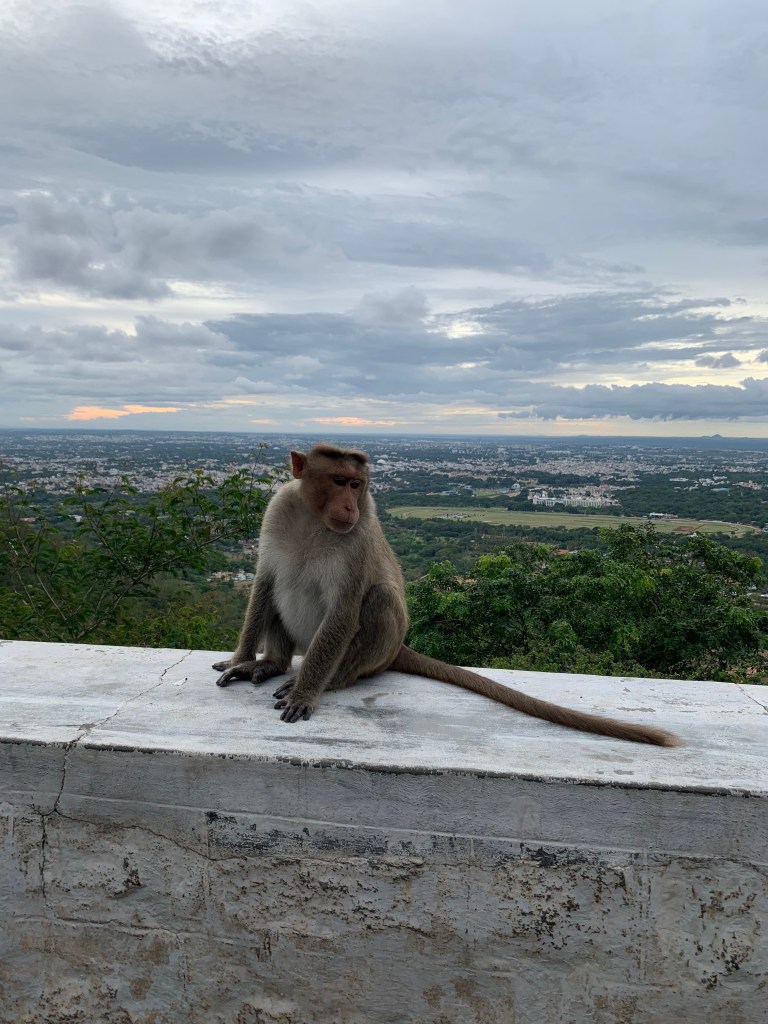
In the evening we visited the Chamundi temple, dedicated to the goddess who according to legend destroyed the demon king of Mysuru. It was built on one of the eight most sacred hills in Southern India, and can be reached by an ancient stone stairway of 1,008 steps. Or you can just drive up which is what we did! The roads were filled with small sales stands and the monkeys scampered about, looking for trouble. On the way into the temple, we saw a family of monkeys. There were two adults and a baby clung to each one. It was hot inside and the temple smelled of incense. People lightly touched the statues and carvings on the stone, in tribute, I think.
After coming out of the temple, we walked into a small courtyard. A male monkey sat proudly in the middle, staring down people who passed by. A woman held out a banana. The monkey snatched it without hesitation, gobbled it up, and ran off.
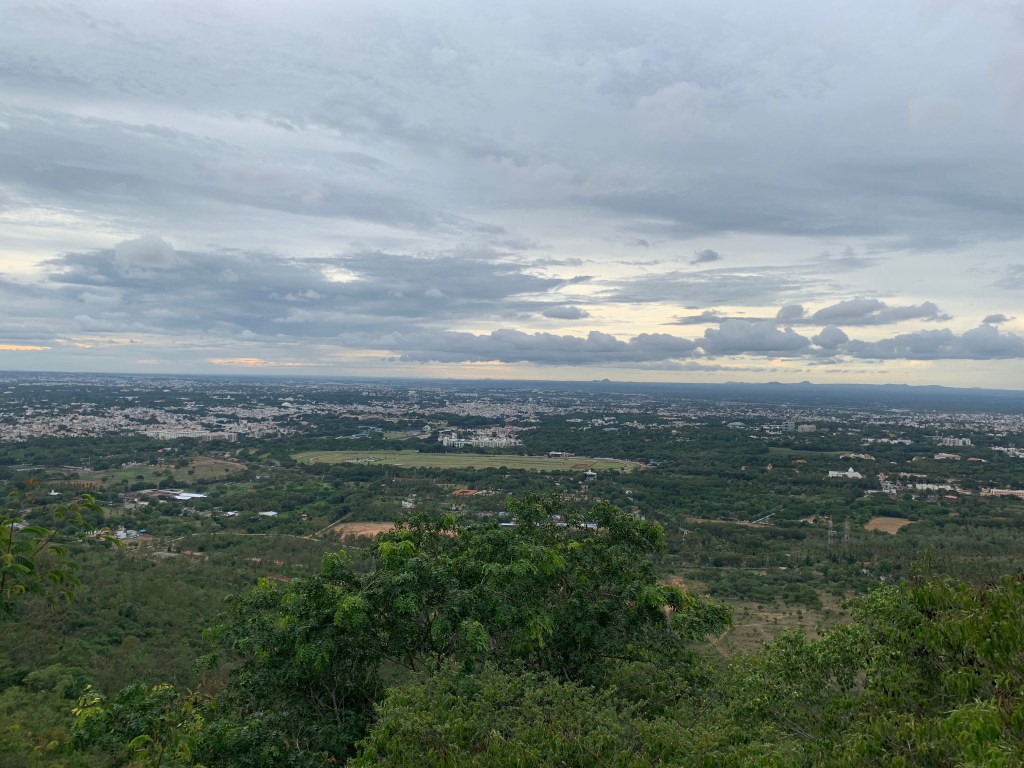
As we drove down the hill, the bushes thinned out to reveal a stunning view, overlooking the city of Mysore, surrounded by lush, green hills circled by mist. More monkeys were up to their monkey business. A ferocious male monkey attempted to leap into the open window of a passing van and a little one sat on the stone. It scratched its bottom, sniffed it, and walked away.
The next day, the bitter taste of the morning tea lingered in my mouth as we drove past the monkeys and old buildings and gulmohar trees towards Bangalore.
 Tranquil & Tumultuous Travels